AIRMAN: AF HANDBOOK I
The item gathering the most interest around our offices this week is Airman, the handbook for Air Force personnel that reinforces its core values while informing servicemen and servicewomen with a short history of the branch. The small book offers pictures and descriptions of insignia, ranks, and occupational badges, and compact illustrations and descriptions of everything from Operations to Aircraft. Airman is, of course, available online, but the guide is irresistible when seen in person, as everyone who spies it quickly wants to flip through its pages. It's the perfect pocket guide for all things AF. The CU Libraries have copies of AIRMAN dating back to 1957.
OUR CHANGING ATMOSPHERE: Discoveries from EOS Aura
Two NASA pubs make our list this week. The first from NASA's Aura mission. Aura was launched in 2004 to serve a six-year mission to seek out new information on Earth's ozone, air quality and climate. Some of those results are summarized in Discoveries from EOS Aura (PDF), bringing additional evidence of the harmful and long-term aftereffects of human industry and pollution on the Earth's atmosphere. This is a slim but data-rich publication.
 A "smog event" in China, captured by Aura.
Twenty years old and one of the best known projects in NASA history, The Hubble Space Telescope continues to provide astronomists, physicists, and mathematicians extraordinary data about Earth and the universe our planet resides in. The annual Science Year in Review publication is a stellar presentation -- literally! -- of some of the most interesting images and findings from the program. The 2009 edition is not available online, so check out our copy from Government Information, or settle for some of the equally engaging publications from previous years.
 Galaxy NCG 4710, as photographed in 2009 by Hubble
As always, each of the above publications is available in the Government Information Library, on the third floor of Norlin Library.


Monday, December 06, 2010
Internet Privacy and the 'Do Not Track' Proposal: The FTC is Open to Comments
Last Tuesday morning, the House Subcommittee on Commerce, Trade and Consumer Protection opened hearings on Internet privacy for consumers in a session entitled Do-Not-Track Legislation: Is Now the Right Time?
Dealing with how companies collect, compile and sell information about visitors to their commercial Web sites, the outcome of this discussion has the potential to create radical changes in consumer protection online, and a fundamental shift in the practices of almost every company that conducts business online.
The hearings may sound like something straight off the desk of Senator John McCain, but actually center around a plan by the Federal Trade Commission to allow consumers to opt out of having their personal information and Internet browsing habits be collected by commercial sites. Indeed, the plan goes one step further in protecting consumer rights by prohibiting any such tracking of Internet behaviors except where permission has been explicitly provided by consumers. In other words, individuals would have to opt in before their information could be tracked, stored, or sold, which is nearly an about face from current Internet business practices that rarely broadcast when profiles are created for visitors, or when -- and to whom -- those profiles are sold.
Similar in title to the widely popular Do-Not-Call Implementation Act of 2003, which gave the Federal Trade Commission powers to enforce the National Do-Not-Call Registry, the Do-Not-Track proposal also shares a significant framework with that Law. Both are structured around a year 2000 document from the FTC called Fair Information Practice (FIP) Principles.
Foremost among the FIP principles are notice and awareness, with the following items "recognized as essential to ensuring that consumers are properly informed before divulging personal information":
One key difference that the FTC recommends, however, is that while the Do-Not-Call Registry requires a unique identifier for each opt out (i.e., a specific telephone number to be added to the block list), Do-Not-Track legislation should NOT require a unique identifier -- because that would effectively identify individuals who have asked specifically NOT to be uniquely identified. Instead, the FTC proposed in their testimony that the most effective opt out would "likely involve placing a setting similar to a persistent cookie on a consumer’s browser, and conveying that setting to sites that the browser visits, to signal whether or not the consumer wants to be tracked or receive targeted advertisements."
Questions remain on how current browser privacy options do or do not comply with the FTC's stated goals, and whether a browser setting provides enough of desired protections. The plan is an interesting beginning, however, to a needed conversation on expectations of Internet privacy and the realities of online commerce.
The FTC's full report is available as a PDF: Protecting Consumer Privacy in an Era of Rapid Change. You can also watch a streaming video of the hearing or download that video by following the links at the bottom of this FTC page.
The FTC is also accepting Public Commentary on its plan for Internet Privacy. Public comments will be accepted until January 31, 2011. To file a public comment electronically, please click here and follow the instructions.
Dealing with how companies collect, compile and sell information about visitors to their commercial Web sites, the outcome of this discussion has the potential to create radical changes in consumer protection online, and a fundamental shift in the practices of almost every company that conducts business online.
The hearings may sound like something straight off the desk of Senator John McCain, but actually center around a plan by the Federal Trade Commission to allow consumers to opt out of having their personal information and Internet browsing habits be collected by commercial sites. Indeed, the plan goes one step further in protecting consumer rights by prohibiting any such tracking of Internet behaviors except where permission has been explicitly provided by consumers. In other words, individuals would have to opt in before their information could be tracked, stored, or sold, which is nearly an about face from current Internet business practices that rarely broadcast when profiles are created for visitors, or when -- and to whom -- those profiles are sold.
Similar in title to the widely popular Do-Not-Call Implementation Act of 2003, which gave the Federal Trade Commission powers to enforce the National Do-Not-Call Registry, the Do-Not-Track proposal also shares a significant framework with that Law. Both are structured around a year 2000 document from the FTC called Fair Information Practice (FIP) Principles.

Similarities between the proposed Do-Not-Track plan and the Do-Not-Call Registry are very intentional. No word on whether either apply within a women's correctional facility.
Foremost among the FIP principles are notice and awareness, with the following items "recognized as essential to ensuring that consumers are properly informed before divulging personal information":
Identification of the entity collecting the data;
Identification of the uses to which the data will be put;
Identification of any potential recipients of the data;
The nature of the data collected and the means by which it is collected if not obvious (passively, by means of electronic monitoring, or actively, by asking the consumer to provide the information);
Whether the provision of the requested data is voluntary or required, and the consequences of a refusal to provide the requested information; and
The steps taken by the data collector to ensure the confidentiality, integrity and quality of the data.
One key difference that the FTC recommends, however, is that while the Do-Not-Call Registry requires a unique identifier for each opt out (i.e., a specific telephone number to be added to the block list), Do-Not-Track legislation should NOT require a unique identifier -- because that would effectively identify individuals who have asked specifically NOT to be uniquely identified. Instead, the FTC proposed in their testimony that the most effective opt out would "likely involve placing a setting similar to a persistent cookie on a consumer’s browser, and conveying that setting to sites that the browser visits, to signal whether or not the consumer wants to be tracked or receive targeted advertisements."
Questions remain on how current browser privacy options do or do not comply with the FTC's stated goals, and whether a browser setting provides enough of desired protections. The plan is an interesting beginning, however, to a needed conversation on expectations of Internet privacy and the realities of online commerce.
The FTC's full report is available as a PDF: Protecting Consumer Privacy in an Era of Rapid Change. You can also watch a streaming video of the hearing or download that video by following the links at the bottom of this FTC page.
 Click the image to see a PDF copy of the FTC's proposed Internet Privacy plan.
The FTC is also accepting Public Commentary on its plan for Internet Privacy. Public comments will be accepted until January 31, 2011. To file a public comment electronically, please click here and follow the instructions.
Friday, December 03, 2010
GAO Reports and Releases
 The Government Accountability Office (GAO) which is often called the investigative arm of Congress. This set of publications from GAO investigate foreign affairs, government agencies, defense, and other issues. If you would like to know more about GAO, check out the library's guide.
Reports
- September 11: World Trade Center Health Programs Business Process Center Proposal and Subsequent Data Collection. GAO-11-243R, December 3.
http://www.gao.gov/products/GAO-11-243R - Displaced Iraqis: Integrated International Strategy Needed to Reintegrate Iraq's Internally Displaced and Returning Refugees. GAO-11-124, December 2.
http://www.gao.gov/products/GAO-11-124
Highlights - http://www.gao.gov/highlights/d11124high.pdf - FEMA Flood Maps: Some Standards and Processes in Place to Promote Map Accuracy and Outreach, but Opportunities Exist to Address Implementation Challenges. GAO-11-17, December 2.
http://www.gao.gov/products/GAO-11-17
Highlights - http://www.gao.gov/highlights/d1117high.pdf - Personnel Security Clearances: Progress Has Been Made to Improve Timeliness but Continued Oversight Is Needed to Sustain Momentum. GAO-11-65, November 19.
http://www.gao.gov/products/GAO-11-65
Highlights - http://www.gao.gov/highlights/d1165high.pdf - Information Technology: Veterans Affairs Can Further Improve Its Development Process for Its New Education Benefits System. GAO-11-115, December 1.
http://www.gao.gov/products/GAO-11-115
Highlights - http://www.gao.gov/highlights/d11115high.pdf - Moving Illegal Proceeds: Challenges Exist in the Federal Government's Effort to Stem Cross-Border Currency Smuggling. GAO-11-73, October 25.
http://www.gao.gov/products/GAO-11-73
Highlights - http://www.gao.gov/highlights/d1173high.pdf
Podcast - http://www.gao.gov/podcast/watchdog_episode_39.html - Telecommunications: Improved Management Can Enhance FCC Decision Making for the Universal Service Fund Low-Income Program. GAO-11-11, October 28.
http://www.gao.gov/products/GAO-11-11
Highlights - http://www.gao.gov/highlights/d1111high.pdf - Public Transportation: Transit Agencies' Actions to Address Increased Ridership Demand and Options to Help Meet Future Demand. GAO-11-94, November 30.
http://www.gao.gov/products/GAO-11-94
Highlights - http://www.gao.gov/highlights/d1194high.pdf - Oral Health: Efforts Underway to Improve Children's Access to Dental Services, but Sustained Attention Needed to Address Ongoing Concerns. GAO-11-96, November 30.
http://www.gao.gov/products/GAO-11-96
Highlights - http://www.gao.gov/highlights/d1196high.pdf - Information Security: Federal Agencies Have Taken Steps to Secure Wireless Networks, but Further Actions Can Mitigate Risk. GAO-11-43, November 30.
http://www.gao.gov/products/GAO-11-43
Highlights - http://www.gao.gov/highlights/d1143high.pdf - Information Security: Federal Deposit Insurance Corporation Needs to Mitigate Control Weaknesses. GAO-11-29, November 30.
http://www.gao.gov/products/GAO-11-29
Highlights - http://www.gao.gov/highlights/d1129high.pdf - Federal Oil and Gas Leases: Opportunities Exist to Capture Vented and Flared Natural Gas, Which Would Increase Royalty Payments and Reduce Greenhouse Gases. GAO-11-34, October 29.
http://www.gao.gov/products/GAO-11-34
Highlights - http://www.gao.gov/highlights/d1134high.pdf
Video - http://www.gao.gov/products/GAO-11-34?action=play - Energy-Water Nexus: A Better and Coordinated Understanding of Water Resources Could Help Mitigate the Impacts of Potential Oil Shale Development. GAO-11-35, October 29.
http://www.gao.gov/products/GAO-11-35
Highlights - http://www.gao.gov/highlights/d1135high.pdf - Forest Service Research and Development: Improvements in Delivery of Research Results Can Help Ensure That Benefits of Research Are Realized. GAO-11-12, October 29.
http://www.gao.gov/products/GAO-11-12
Highlights - http://www.gao.gov/highlights/d1112high.pdf - Information Technology: HUD Needs to Better Define Commitments and Disclose Risks for Modernization Projects in Future Expenditure Plans. GAO-11-72, November 23.
http://www.gao.gov/products/GAO-11-72
Highlights - http://www.gao.gov/highlights/d1172high.pdf - NASA: Medium Launch Transition Strategy Leverages Ongoing Investments but Is Not Without Risk. GAO-11-107, November 22.
http://www.gao.gov/products/GAO-11-107
Highlights - http://www.gao.gov/highlights/d11107high.pdf
- DOD Components Are Not Sending Required Information on Contract Awards to the Office of Public Affairs. GAO-11-122R, November 30.
http://www.gao.gov/products/GAO-11-122R - Integration of Current Implementation Efforts with Long-term Planning for the Next Generation Air Transportation System. GAO-11-132R, November 22.
http://www.gao.gov/products/GAO-11-132R - Management Report: Opportunities for Improvements in FDIC's Internal Controls and Accounting Procedures. GAO-11-23R, November 30.
http://www.gao.gov/products/GAO-11-23R - Maritime Security: Responses to Questions for the Record. GAO-11-140R, October 22.
http://www.gao.gov/products/GAO-11-140R
- U.S. Postal Service: Legislation Needed to Address Key Challenges, by Phillip Herr, director, physical infrastructure issues, before the Subcommittee on Federal Financial Management, Government Information, Federal Services, and International Security, Senate Committee on Homeland Security and Governmental Affairs. GAO-11-244T, December 2.
http://www.gao.gov/products/GAO-11-244T
Highlights - http://www.gao.gov/highlights/d11244thigh.pdf - Aviation Security: DHS has Taken Steps to Enhance International Aviation Security and Facilitate Compliance with International Standards, but Challenges Remain, by Stephen Lord, director, homeland security and justice issues, before the Subcommittee on Aviation Operations, Safety, and Security, Senate Committee on Commerce, Science, and Transportation. GAO-11-238T, November 30.
http://www.gao.gov/products/GAO-11-238T
Highlights - http://www.gao.gov/highlights/d11238thigh.pdf - Pension Benefit Guaranty Corporation: Improvements Needed to Strengthen Governance Structure and Strategic Management, by Barbara D. Bovbjerg, managing director, education, workforce, and income security, before the Senate Committee on Health, Education, Labor, and Pensions. GAO-11-182T, December 1.
http://www.gao.gov/products/GAO-11-182T
Highlights - http://www.gao.gov/highlights/d11182thigh.pdf - Personnel Security Clearances: Overall Progress Has Been Made to Reform the Governmentwide Security Clearance Process, by Brenda S. Farrell, director, defense capabilities and management, before the Subcommittee on Intelligence Community Management, House Permanent Select Committee on Intelligence. GAO-11-232T, December 1.
http://www.gao.gov/products/GAO-11-232T - NASA: Issues Implementing the NASA Authorization Act of 2010, by Cristina Chaplain, director, acquisition and sourcing management, and Susan A. Poling, managing associate general counsel, before the Senate Committee on Commerce, Science, and Transportation. GAO-11-216T, December 1.
http://www.gao.gov/products/GAO-11-216T
Highlights - http://www.gao.gov/highlights/d11216thigh.pdf - Sudan Divestment: U.S. Investors Sold Assets but Could Benefit from Additional Information about Companies' Ties to Sudan, by Thomas Melito, director, international affairs and trade, before the Subcommittee on International Monetary Policy and Trade, House Committee on Financial Services. GAO-11-245T, November 30.
http://www.gao.gov/products/GAO-11-245T
Highlights - http://www.gao.gov/highlights/d11245thigh.pdf
- "Acquisition Reform Challenges Facing Government," by Gene L. Dodaro, acting comptroller general, before the Integrated Program Management 2010 Conference, in Bethesda, Maryland. GAO-11-209CG, November 8, 2010
http://www.gao.gov/products/GAO-11-209CG
Wednesday, December 01, 2010
World Aids Day 2010
Today is World Aids Day so here are a few resources to check out on this day:
Still looking for more information? Check out the library's guide to health and medical information.
- UNAIDS
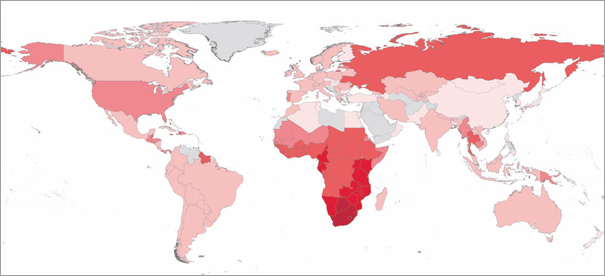
This is the organization within the United Nations that works on issues of HIV/AIDS. They are redesigning their site, but you can view their blog for current information and their Global Report for information on HIV/AIDS worldwide. It is in this report that brings us the brings us the map below showing prevalence rates across the world. - CDC HIV/AIDS
This is the web site to visit for information on HIV/AIDS in the United States. They have a short press release on World AIDS day on this site which links off to a web site on HIV in the US, where the graph below illustrates the growth of the HIV infections and people living with HIV/AIDS in the US from 1977 to 2009.

Still looking for more information? Check out the library's guide to health and medical information.
Congressional Research Service (CRS) Reports
Congressional Research Service (CRS) is a research agency of Congress and writes reports at Congress' request. These short reports (usually 10-40 pages long) cover recent topics of concern. This week brings us reports on defense, energy, trade, and much more. Although these reports are in the public domain, there is no central database available to the public. To get a copy of a CRS report, you can request it from your senator or representative. These reports were discovered by Secrecy News and Open CRS:
Not on campus but still want access to additional reports? The library has a guide linking to various additional sources of CRS reports.
- Countering Terrorism in East Africa: The U.S. Response
- Latin America: Terrorism Issues
- U.S.-South Korea Relations
- Accelerated Vehicle Retirement Programs in Japan and South Korea: Background for Congress
- Afghanistan Casualties: Military Forces and Civilians
- Afghanistan: Post-Taliban Governance, Security, and U.S. Policy
- Biomass: Comparison of Definitions in Legislation Through the 111th Congress
- Coast Guard Deepwater Acquisition Programs: Background, Oversight Issues, and Options for Congress
- Conventional Prompt Global Strike and Long-Range Ballistic Missiles: Background and Issues
- False Patent Marking: Litigation and Legislation
- Foreign Science and Engineering Presence in U.S. Institutions and the Labor Force
- House Committees: Categories and Rules for Committee Assignments
- Immigration Reform Issues in the 111th Congress
- Intermediate-Level Blends of Ethanol in Gasoline, and the Ethanol "Blend Wall"
- Legal Issues Related to Proving "Service Connection" for VA Disability Compensation: Statutory Presumptions
- Navy Irregular Warfare and Counterterrorism Operations: Background and Issues for Congress
- Navy SSBN(X) Ballistic Missile Submarine Program: Background and Issues for Congress
- Oil Spill Legislation in the 111th Congress
- Presidential Appointments to Full-Time Positions on Regulatory and Other Collegial Boards and Commissions, 110th Congress
- Regular Vetoes and Pocket Vetoes: An Overview
- Rulemaking Requirements and Authorities in the Dodd-Frank Wall Street Reform and Consumer Protection Act
- Tariff Modifications: Miscellaneous Tariff Bills
- The Bush Tax Cuts and the Economy
- The Emergency Planning and Community Right-to-Know Act (EPCRA): A Summary
- The Servicemembers Civil Relief Act (SCRA): A Private Cause of Action
- The Status of the Basel III Capital Adequacy Accord
- U.S. International Trade: Trends and Forecasts
- Veterans' Benefits: Dependency and Indemnity Compensation (DIC) for Survivors
- Veterans' Benefits: Pension Benefit Programs Christine Scott Specialist in Social Policy
- Visa Waiver Program
- Water Infrastructure Projects Designated in EPA Appropriations: Trends and Policy Implications
- Winter Fuels Outlook 2010-2011
Not on campus but still want access to additional reports? The library has a guide linking to various additional sources of CRS reports.
Subscribe to:
Posts (Atom)