Showing posts with label Colorado. Show all posts

Tuesday, May 03, 2011

Getting away from campus

The end of the semester is upon us and while it may be hard to imagine that you can get outside when you have been in the library for 24 hours studying, soon finals will be over. Therefore, why not spend some time outdoors in one of the various parks in Colorado.
Looking back down the Cataract Gulch Trail outside Lake City, Colorado

There are numerous ways to explore Colorado with a variety of organizations and the alphabet soup can be overwhelming. So here is an attempt to provide you with some of the places to go to find information on parks in Colorado.

Local Area Open Spaces


  • Boulder City Open Spaces Enjoy walking at Chautauqua or checking out Boulder Falls? These are all Boulder City open spaces and this web site gives you trail maps, closures, and information on pet restrictions.
  • Boulder County Open Spaces Did you know that Boulder County overseas almost 98,000 acres of open space? Not all open space is trails, some of it is used for agricultural purposes. Check out the breakdown of the acreage and find maps, trails and much more on this site.
Statewide Resources
  • Colorado State Parks With the abundant local and federal resources you may not have explored the 42 state parks we have here in Colorado, but these parks give you access to boating, fishing, and beautiful trails.
  • National Park Service: Colorado There are 13 national parks in Colorado (I've only been to 7 of them), scattered from the eastern plains to the Utah border. This web site gives you information on trails, history and much more on each park.
  • National Forest Service: Colorado The Forest Service manages 13 national forests in Colorado, including the Arapho and Roosevelt National Forests here on the front range. If you don't know the name of your favorite national forest, check out this interactive national map.
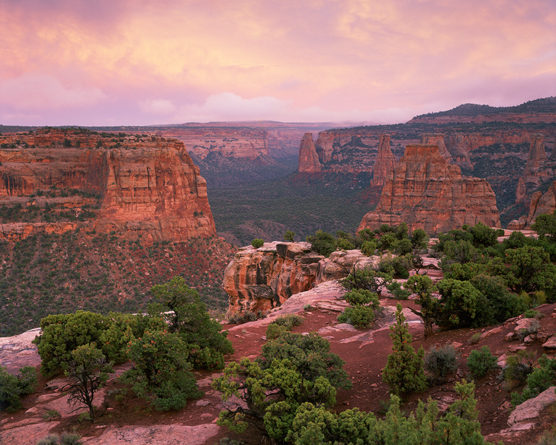
  • Bureau of Land Management: Colorado Last, but not least, is the BLM. The BLM in Colorado manages 8.3 million (yes, million) acres in Colorado. The picture above was taken on a BLM managed trail and their field offices provide detailed and useful trail descriptions across Colorado.
Still looking for more information? Check out the library's guide to parks, forests, grasslands, wildlife refuges, and historic places.

Tuesday, March 01, 2011

Colorado National Monument

As you race down I-70 past Grand Junction you may have seen a sign for the Colorado National Monument. Now how many of you have actually stopped and seen the monument? Did you wonder what it was a monument of? Or maybe you knew that national monuments are also managed by the National Park Service. I went there one memorable evening at sunset and watched the rocks turn an amazing red. This year brings us the 100th anniversary of the declaration of the 20,000 acres as a national monument. In honor of this I thought I would share a few resources.

Book Cliffs by Rob Kurtzman

(Image from National Park Service web site, taken by Rob Kurtzman)


First, how does a place get declared a national monument? Well, this action can be taken by the President of the United States without congressional approval. This designation offers certain protections to the area and can be done much more quickly. You can read about the history of this designation in a CRS report called "National Monument Issues" from 2002.

Second, why not check out the Colorado National Monument at this anniversary? They have a web site that provides information on events, things to see in the park and the beautiful Rim Rock drive.

Finally, want to learn about the movement to give the Colorado National Monument, National Park status? Check out this news story "Park Status for CO monument?" from Colorado Public Radio or the press release on the meeting Senator Udall had on this issue in Grand Junction.

Still want more? Check out the library's guide to Parks, Forests, Wildlife Refuges, and Historic Places.

Monday, November 22, 2010

New Documents of Note for Nov. 22: Child Health, Obesity, and the Great Recession

This week's selection of notable government publications recently received at the CU Boulder Libraries come from a variety of sources.

Child Health USA 2010, published by the Health Resources and Services Administration, is the latest of an annual, statistics-filled publication that has also been fully reproduced online. This publication reveals the ongoing discrepancies in child health and welfare, particularly where those differences involve race. For example, you may be startled to realize that State numbers for infant mortality demonstrate that black infants in Colorado suffer more than double the number of deaths per live birth versus white children in the state. These are important figures to remember as we use the holidays to seek out opportunities to positively affect our neighbors' lives.

From the Organisation for Economic Co-operation and Development, or "OECD," CU Boulder has received, "Obesity and the Economics of Prevention." Surprising almost no-one, the United States ranks first in obesity, with 36% of women and 32% of men labeled as such (Mexico and South Africa come in shortly behind the U.S.). Countries with the lowest rates for obesity are India (1% of men and women both) and Indonesia (0% of men, and 3% of women). Clearly, these numbers were taken just after we all ate last year's Thanksgiving dinner.

"From Crisis to Recovery" is another timely OECD publication. The short book explores "the causes, course and consequences of the Great Recession," and reveals interesting trends. For example, the illustration below shows which countries (in blue) saw positive economic growth during 2009. Nearly all of them are in the Southern Hemisphere, revealing the interdependency of Western economies in vivid terms.


Each of these publications are available in print from Norlin Library and online thought the links above.

Monday, November 01, 2010

Election Day 2010

Tomorrow brings us the midterm elections of 2010 for the House and Senate, as well as a variety of Colorado, local and initiative measures. Here are a few resources from the state and county to help you prepare for tomorrow:
Still looking for more information? Why not check out the library's elections and voting guide.

Tuesday, September 07, 2010

Fourmile Wildfire

The smoke that has descended over the city of Boulder today is from the Fourmile wildfire. There are a number of places to go for information, both government and media sources. Here they are:

Thursday, April 15, 2010

Deadline to File Your Tax Returns

Today is the April 15 deadline to file your tax returns. If you need more time, there are federal and state options for extending this due date:

For help finding other information about taxes, check out our guide.

Wednesday, March 24, 2010

Snowstorm Hits Colorado

Heavy, wet snow fell quickly on Tuesday night in Colorado, blanketing the Front Range with more than two feet of snow in some areas and closing highways, downing power lines, and causing closures or delayed starts at numerous schools, government buildings, and businesses today. (See "Spring Still on the March in Denver Area" in the Denver Post.) The National Weather Service (part of the National Oceanic and Atmospheric Administration) provides some interesting data about past, present, and future climatological events in Colorado. Here are a few that provide information about snowfall:

To find information about the latest road conditions in Colorado, you can refer to the Colorado Department of Transportation's COTRIP, which features web cams of major streets and intersections, information on road closures and traffic delays, and maps of the major highways with road conditions.

To find additional web resources about Colorado weather, refer to our guide.

Wednesday, March 17, 2010

Toxic Cleanup Efforts in Colorado

Newly proposed legislation in Colorado would force companies in the state to clean up current toxic waste before they could begin new or expanded operations. According the Denver Post, the new legislation would require companies to alert residents within a mile of a mill if groundwater was contaminated. It would also allow communities to have a say in cleanup plans (see today's article, "Tougher Rules Sought on Cleaning Toxic Sites in Colorado") .

At issue is the Cotter uranium mill south of Canon City, a now closed facility where a state-supported Superfund cleanup effort has been going on for 25 years. At this site, efforts to prevent groundwater contamination have led to toxic tailings leaching into groundwater. Cotter has plans to reopen its facility.

If you're seeking online information about toxic cleanup efforts in Colorado and current regulations in the state, here are a few helpful resources:

To find additional resources, take a look at our guide to environment.

Thursday, February 25, 2010

No More Tax Break for Candy, Soda, Etc. in Colorado

There will be no more state sales tax exemption on your purchase of M&Ms. Or Pepsi. Or downloaded software. Today Colorado Governor Bill Ritter signed into law bills that would end state tax exemptions on a number of items, from candy and soda (HB 1191) to direct mail materials (HB 1189). As the Denver Post reports, some of these bills will take effect as soon as Monday, March 1 (see "Ritter Signs Bill to End Tax Breaks, Help Balance Budget").

The bills are intended to balance the state's budget. A press release on Governor Ritter's web site states that, collectively, the bills should generate $15.6 million this fiscal year and $132.6 million next fiscal year for the state. On both this press release and the Post article, you can find a complete list of the nine bills that have become law and the items that would no longer be tax exempt:

  • direct mail (HB 1189)
  • industrial fuels (HB 1190
  • candy and soda (HB 1191)
  • software (HB 1192)
  • online sales by out-of-state retailers (HB 1193)
  • "non-essential" restaurant items (HB 1194)
  • agricultural compounds (HB 1195)
  • alternative-fuel vehicles (HB 1196)
  • business net-operating losses (HB 1199)
You can find the individual bills on this page of the Colorado General Assembly's web site (go to the "Select Bill Range" box at the top of the page and select "House Bills 1151-1200"). If you need additional Colorado government resources related to these bills, you can refer to our guide.

Monday, February 15, 2010

Boulder Struggles to Progress in Saving the Planet

This weekend's Wall Street Journal highlighted the city of Boulder as an example of how even the most environmentally friendly of communities struggle to save energy, reduce pollution, and protect the environment (read "Even Boulder Finds It Isn't Easy Going Green"). The article contends that "as Congress considers how to encourage Americans to conserve more energy, Boulder stands as a cautionary tale about the limits of good intentions," because its subsidized energy audits have not spurred residents and businesses to change enough of their energy-use practices, and its carbon tax has been unsuccessful in reducing carbon emissions to below-1990 levels (in compliance with the Kyoto Protocol).

Where can you find local government resources about Boulder's environmental efforts? Take a look at its home page on Sustainability, which includes links to Boulder County's sustainability mission statement, goals, and objectives, the ClimateSmart Loan Program, and the Community Guide to Boulder's Climate Action Plan (October 2009, includes a progress report).

Need help finding related resources? Takes a look at our guides to Boulder government resources (city and county) and the environment.

Monday, February 01, 2010

Medical Marijuana Bill Passes Colorado Senate

If you've been checking the Denver Post online today, you've probably noticed that the Colorado Senate passed a bill that would put new restrictions on medical marijuana use in the state (see this early afternoon update, or check out the Post's Marijuana News page for links to all sorts of information about the issue).

Senate Bill 10-109, A Bill for an Act Concerning Regulation of the Physician-Patient Relationship for Medical Marijuana Patients, would prevent doctors from writing recommendations inside medical marijuana dispensaries and would require them to examine a person's medical history and conduct a full exam before writing a medical marijuana recommendation for that person. The bill now moves to the Colorado House of Representatives.

You can track SB 10-109, including its history and all versions of the bill, on this web page of the Colorado General Assembly. For additional resources on the Colorado legislature, see our guide.
To find government resources about drugs and related laws and regulations, see this topical guide.

Wednesday, December 09, 2009

Driving in Colorado

Since the snow seems to have arrived to stay I thought it might be time to remind everyone of some of the sources for Colorado travel information with our very varied weather.
I hope that everyone stays warm and safe through these cold days! If you still want more transportation information, check out the library's guide.

Monday, November 30, 2009

Second Largest Fine Ever for Safety Violations in Colo.

One week ago, on November 23, the U.S. Department of Labor (DOL) fined Colorado company Tempel Grain Elevators $1.6 million for safety and labor violations. The fine--the second largest in Colorado history for safety and labor--was assessed following the May 29 death of 17-year-old Cody Rigsby in a grain elevator. According to this article in the Denver Post, "teens as young as 14 drove front-end loaders, forklifts or other dangerous equipment. A 13-year-old had a job working alongside adults. And a lack of safety equipment made falls into the elevators a constant threat, according to a federal investigation." The largest fine levied by OSHA in Colorado was $1.8 million against Samsonite Corp. (the luggage-maker) in 1991.

DOL agencies Occupational Safety and Health Administration (OSHA) and the Wage and Hour Division both fined the grain storage company. See the DOL news release for further details. You can find regulatory information about youth employment (child labor laws) here.

For additional government resources about labor and employment, see our guide.

Wednesday, November 04, 2009

Local Election Results

I am sure all of you managed to get your ballots in yesterday via the mail and are now curious about the results. Here are the best places to go for local results and news coverage:
  • Boulder County Clerk This is where you can get the unofficial results for Boulder city, county, Erie, Louisville, Lafayette, Lyons, Nederland and the school districts. These are unofficial because not all the ballots have been counted and certified, but at this point the results are assumed to be accurate. Wondering if your ballot made it in? You can actually check this out by looking at your voter information!
  • Daily Camera Election Coverage This is a collection of all the articles from the Daily Camera on the election.
  • Denver Post Election Coverage This page has a bit more of a state-wide focus and even includes some national election news.
Still want more elections information? Why not check out the library's guide.

Monday, October 12, 2009

CoverColorado Provides State Health Insurance Option

Today the Denver Post reported on CoverColorado, a state-supported health insurance option for Colorado residents who don't receive health coverage through their employers and who can't get coverage from health insurers due to a pre-existing medical condition. The Post article suggests that if a federal health reform bill mandates state-based public options rather than a federal one, CoverColorado could become Colorado's public option. "We have the infrastructure completely built," CoverColorado's Executive Director Suzanne Bragg-Gamble is quoted as saying.

CoverColorado was created by the Colorado legislature in 1991, and it has specific requirements for eligibility. This nonprofit organization receives about 50 percent of its funding from member premiums, the CoverColorado cash fund, and state insurance premium tax credit allocations as well as gifts, grants, and donations; 25 percent from fees on health insurance and stop loss carriers; and 25 percent from Colorado's Unclaimed Property Fund. You can find this information in the CoverColorado Long-Term Funding Task Force's Final Report to the Colorado General Assembly.

For additional resources, see our guides to Colorado government and health.

Thursday, September 17, 2009

Pinnacol Assurance Reverses Course

Quasi-governmental agency Pinnacol Assurance, the Colorado workers' compensation insurance fund that was on the verge of requesting greater autonomy from the state, changed course on Wednesday.

In July Pinnacol had proposed paying taxes in return for its autonomy from the state. But after holding a meeting with various business groups, Pinnacol officials decided that it should maintain the status quo. A special Colorado committee has been examining the insurance agency since August to determine whether it should receive more state control or a greater level of autonomy. Check the Denver Post for news about the latest Pinnacol decision; see links on the right side of the article for past media coverage of the Pinnacol issue.

Colorado's Pinnacol Assurance special committee web page can be found here, where you can also find a list of committee members; meeting details, agendas, and summaries; and reports and memoranda such as these statistics on Workers Compensation Insurance Market Share.

Searching for links to more Colorado government resources? Take a look at our guide.

Wednesday, September 02, 2009

$320 Million Cuts Implemented in Colorado

Colorado Governor Bill Ritter's FY 2009-2010 budget balancing plan went into effect yesterday, September 1. Governor Ritter's budget balancing package, which includes $320 million in budget cuts, was submitted to Colorado's Joint Budget Committee on August 24, 2009.

Governor Ritter issued an Executive Order Saturday (August 29) implementing the budget cuts (as the executive order explains, Colorado law requires the governor to issue an Executive Order before such budget cuts can be implemented). This article in the Denver Post mentions that although state law only allows Ritter to order a spending cut for three months, he plans to extend the order for the entire fiscal year. The text of the Executive Order clarifies that it will expire on November 30, and then the governor intends to declare "subsequent Executive Orders issued periodically throughout the remainder of the fiscal year."

Want additional links to Colorado government resources? Take a look at our guide.

Monday, August 24, 2009

Colorado Finding Strategies for Problem Bears

Colorado wildlife officers are trying to find ways to handle the increase in human-bear conflicts, such as maulings, break-ins, and one fatality that have occurred this summer in Colorado. Colorado Division of Wildlife officers have had to kill 25 "problem" bears, and they're considering strategies for thinning the state's bear population, such as "adverse conditioning" or hunting. Read the article in the Denver Post.

To teach Coloradans about living with bears in Colorado, the CDW has created a Living with Bears online resource center. The resource includes links to such publications as a "Bearproofing Your Home" fact sheet and "Camping and Hiking in Bear Country." The CDW's website also contains a section about hunting and licensing in Colorado.

For additional links to Colorado government agencies, check out our guide.

Monday, August 17, 2009

Emergency Alerts via Cell Phone

The Daily Camera reports in the case of an emergency "Boulder County residents won't have to rely on their home phones to receive an emergency alert" ("Boulder County to offer emergency alerts via cell phone, e-mail"). There are a number of ways to sign up for this program:
  • CU Community members This is the web site for the CU Police, but you can find the two alert systems that CU students, faculty, and staff should be interested in. First, is the CU system, which sends text messages. The second is the Boulder County system.
  • Boulder City residents This is the main page for the Emergency Mass Notification System and will step you through the process of registering.
  • Boulder County residents This is the page that will answer your frequently asked questions and let you sign up for notification.
  • Longmont residents This page will walk your through signing up for emergency notification at additional numbers or via email.
Want more Boulder resources? Check out the library's guide.

Friday, August 07, 2009

New Model Assesses Education in Colorado

Today marks the official launch of the Colorado Growth Model, a data tool that examines progressive rather than static student achievement in the state. The growth model has taken four years to develop and used at least $1.8 million in public and private funds for research and development. The concept of a growth model is addressed in Colorado S.B. 09-163. You can read more about the new data tool in the Denver Post.

The CSAP (Colorado Student Assessment Program) will still be used to measure student achievement, but the new growth model will examine students' educational progress over time and use aggregate education growth data to determine how schools and districts are progressing educationally. SchoolView is the new website containing data and information about Colorado's Growth Model. To learn how to navigate the website and and find a tutorial on Colorado's Growth Model, go to the website's Learning Center.

For additional Colorado government resources about education and legislation, see our guide.